Large breed
Great Swiss Mountain Dog Puppies
The Greater Swiss Mountain Dog is a large breed of dogs that has its origins in Switzerland. It was one of the most popular breeds in the Swiss alps between the 18th to early 19th century. Today, however, its use has been revolutionized. Despite its size, it is considered a companion or a friendly family dog. Discover more about our Greater Swiss Mountain Dog puppies for sale below!
We do not have Great Swiss Mountain Dog puppies on the floor today. Tell us what you are looking for and we will let you know the moment one arrives, or help you find a breed that suits your home just as well.
- Exercise 60 min a day
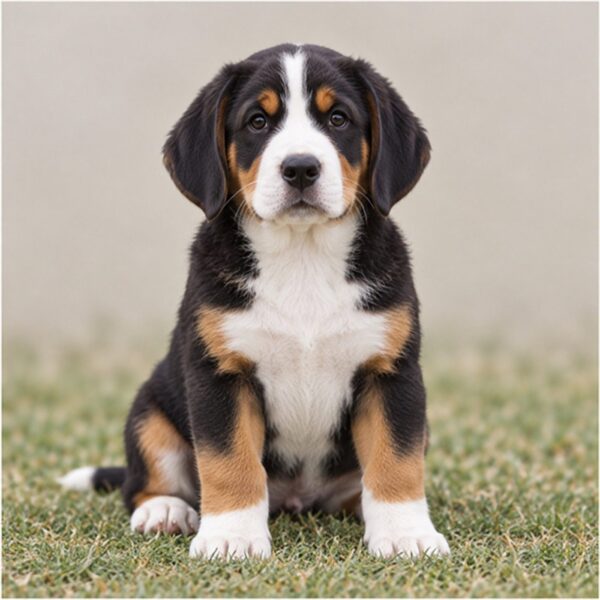
About the Great Swiss Mountain Dog
The Great Swiss Mountain Dog is a charming and devoted breed that has its roots in the Swiss Alps, where they were originally used as versatile farm dogs and loyal companions. With their striking tri-colored coats and solid build, they not only capture the hearts of their families but also bring a sense of stability and warmth to any home. These dogs thrive in family settings, showcasing a particularly gentle nature with young children and being quite sociable with other pets, including cats. Their innate affection for their human companions makes them cherished members of the family who love to be involved in all aspects of daily life.
Read more about the Great Swiss Mountain Dog Show less
While the Great Swiss Mountain Dog is a medium-sized breed that requires regular exercise, they have a moderate energy level, making daily walks and playtime enjoyable without being overwhelming. They do need to stretch their legs and enjoy outdoor adventures, but they also appreciate some cuddle time on the couch after a good play session. Although their shedding level means regular grooming is necessary, a weekly brushing will keep their coat looking its best and minimize the fur around your home.
Intelligent and eager to please, these dogs are reasonably trainable with a gentle hand, so early socialization and consistent training efforts will go a long way. They are relatively low in barking tendencies, which can make them suitable for various living situations, even if they are not the best fit for apartment life. If you are considering adding a Great Swiss Mountain Dog to your family, you will find a loyal and affectionate companion who thrives in a loving and active environment. For those in Petland Fort Myers, Florida, this breed will surely enrich your life with their friendly disposition and eagerness to be by your side.
Great Swiss Mountain Dog breed profile
Every score below is set by our team for this breed. Higher is simply more of that trait, not better or worse.
Temperament
-
Affection Very affectionate
-
Playfulness Playful
-
With strangers Warms up
-
Territorial Somewhat
-
Prey drive Low
Family & other pets
-
Young children Good
-
Older children Good
-
Other dogs Usually fine
-
Cats With introductions
Energy & exercise
-
Energy Moderate
-
Mental stimulation Moderate
Training
-
Trainability Willing learner
-
Intelligence Bright
-
Stubbornness A stubborn streak
Care & upkeep
-
Shedding Moderate
-
Drooling Some
-
Barking Occasional
Home life
-
Apartment living Needs real space
-
Time alone Short periods
-
Cold weather Thrives in it
-
Warm weather Average
A good match for
-
First-time owners Some experience helps
-
Senior owners Suitable
-
Running partner Moderate
-
Hiking Good
-
Therapy work Possible
-
Guarding Protective
Living with a Great Swiss Mountain Dog
Breed History
The Greater Swiss Mountain Dog originated in Switzerland. Several theories have been passed around but there is no certain theory about its exact origin. However, two theories stand out from the rest.
The first theory claims that they were brought by the Romans during the Roman invasion. The second theory, on the other hand, claims that these dogs were brought by the Phoenicians to settlements in Spain in 1100 BC.
The Greater Swiss Mountain Dog is the oldest and largest of the four Sennenhund Breeds. These include the Appenzell Cattle Dog, Entlebuch Cattle Dog, and the Bernese Mountain Dog. In ancient Switzerland, the average Swiss farmer needed a large dog that could perform several tasks on the farm.
As such, these dogs were used as farm dogs. They were also used by butchers and other laymen who used them as guard dogs. Thus, they earned the name “Butcher’s dog” or “The poor man’s horse”.
Many people believe that the Greater Swiss Mountain Dog nearly went extinct in the late 19th century. This was because several other breeds were doing their jobs. However, they were rediscovered in the early 20th century.
Temperament
The Greater Swiss Mountain Dog is a very sociable and enthusiastic animal. It relates well with children and humans around them. Although it may be cautious around strangers at first, it quickly warms up to friendly humans.
Despite their large size, Greater Swiss Mountain Dogs are not aggressive. They are considerably gentle. They also require a lot of attention and affection from their owners and do not cope well in isolation.
The Greater Swiss Mountain Dog could be stubborn and determined. As such, it may be difficult and time-consuming to housebreak them. One would need to be firm yet loving with this breed of dogs.
Environment
Greater Swiss Mountain Dogs fare better in large apartments because of their size. Their huge and sturdy body frame requires a lot of space to stretch and run around. They are also suited for the outdoors, provided that the weather is cool.
They love to run outdoors when the weather is cool. However, they are prone to overheating and as such, should not be left outdoors for long during hot periods. These dogs do not fare well in kennels either and generally prefer to be indoors.
Thus, families or individuals who want to adopt a Greater Swiss Mountain Dog must ensure that they have a large apartment space.
Exercise
Just like any other breed, the Greater Swiss Mountain Dog needs daily, regular exercise. This could range from minor exercise routines such as a walk or playing fetch.
These dogs should not be taken on a run because they simply cannot keep up with it. They are more suited for exercises that involve pulling and dragging.
Owners should watch out for signs of exhaustion during exercise routines so as to avoid heat exhaustion.
Grooming
The Great Swiss Mountain Dog does not require much in the way of grooming. Although it sheds heavily, this can be taken care of by brushing its coat weekly.
They also require regular baths in order to keep their coats shiny and reduce the risk of fleas. In essence, the grooming process for this breed of dogs is quite simple and straightforward.
Our Greater Swiss Mountain Dog puppies for sale come from either licensed commercial breeders or hobby breeders with no more than 5 breeding mothers. Licensed commercial breeders account for less than 20% of all breeders in the country.
The unregulated breeders who are selling outside of the regulations and without a license are what we consider to be “Puppy Mills.” We are committed to offering Greater Swiss Mountain Dog puppies who will grow up to become important members of your family. We only purchase puppies from the very best sources, and we stand behind every puppy we sell.
Caring for a Great Swiss Mountain Dog
- Grooming
- Weekly brushing
- Grooming cost
- Average
- Monthly food
- Average
- Outdoor space
- A yard is recommended
- Allergy friendly
- Not considered hypoallergenic
Frequently Asked Questions
Are Greater Swiss Mountain Dogs safe for children?
Yes. Despite their large size, these dogs are actually very friendly and farewell with children.
Do I have to worry about bites with Greater Swiss Mountain Dogs?
Greater Swiss Mountain Dogs are not aggressive and won’t bite unless they sense animosity. If they show signs of aggression, you can curb the behavior.
Can Greater Swiss Mountain Dogs be used as a guard dog?
Yes, they can. This breed of dogs are very alert and will bark if they notice anything strange or dangerous.
Will my Greater Swiss Mountain Dog get along with my cat?
Greater Swiss Mountain Dogs are very friendly and will get along with other pets. However, it is better to raise them alongside other pets in order to reduce the risk of territoriality.
How often do Greater Swiss Mountain Dogs need shots?
This depends on the age and health status of the dog. It is important to consult your vet.
What health problems do I need to look out for with Greater Swiss Mountain Dogs?
These dogs are usually prone to bloating. They may also experience bone or joint problems.
What do Greater Swiss Mountain Dogs eat?
They eat mainly dry food of high quality. It is important to feed them on a diet well suited for large dogs.
Can I keep Greater Swiss Mountain Dogs outdoors?
Greater Swiss Mountain Dogs loves the outdoors but do not cope well when isolated from their family. Thus, it is best to keep them indoors.